
The brief
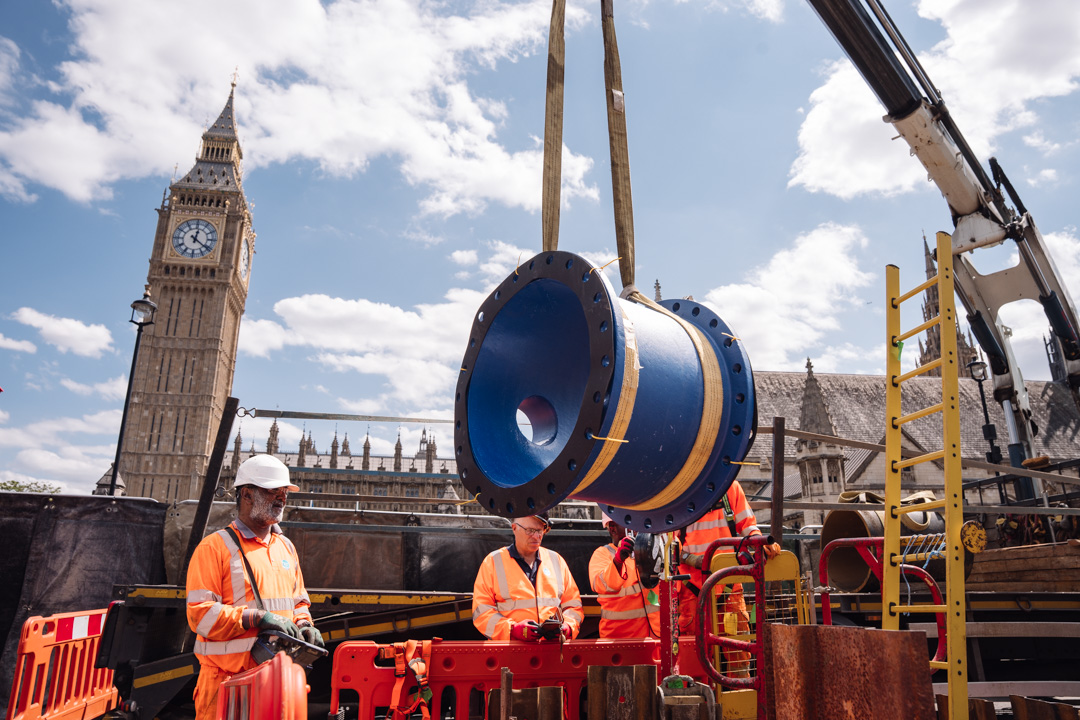
The Houses of Parliament needed a new 225mm PE fire main, running from Parliament Square to the southern entrance gates. The route crossed one of the busiest, most utility-congested roads in London, so the works had to be tightly phased around the sensitive traffic environment — originally planned as four phases to get the new main safely commissioned.
Why the plan changed mid-job
The team installed a shaft onto the existing 30-inch trunk main and fitted a new 30-inch × 200mm tee for the cross connection, laying the new main out to the centre of the second lane. Once backfilled and reinstated, traffic management was struck and reset for phase two — excavating on from the end of the new main through to the gates.
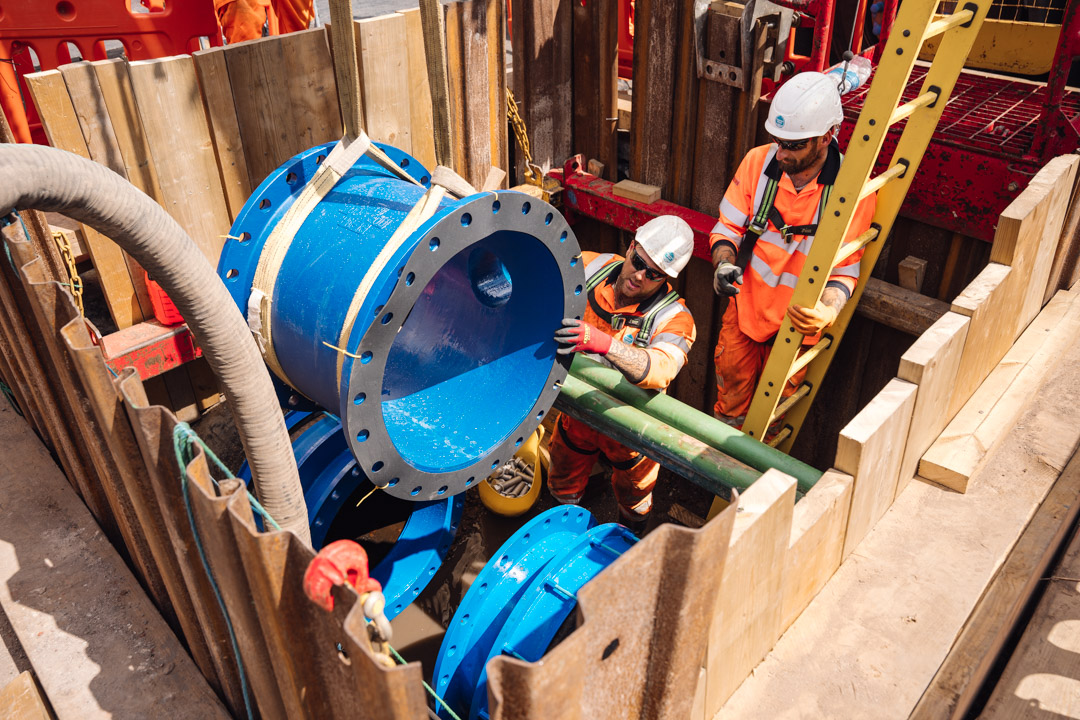
That's where the job stopped going to plan. Exposing the existing main at the gates, the team found it deeper than recorded — and clashing with live HV cables. Ground conditions nobody had on record. The fix meant driving a heading so the previously installed main could be cut back and tied in with a bespoke fabricated steel section, rather than the straightforward connection that had been designed for.
The method
To hold the compressed programme through the added complexity, the team worked round the clock — two gangs covering the job 24/7 on 12-hour shifts.
Where it stands
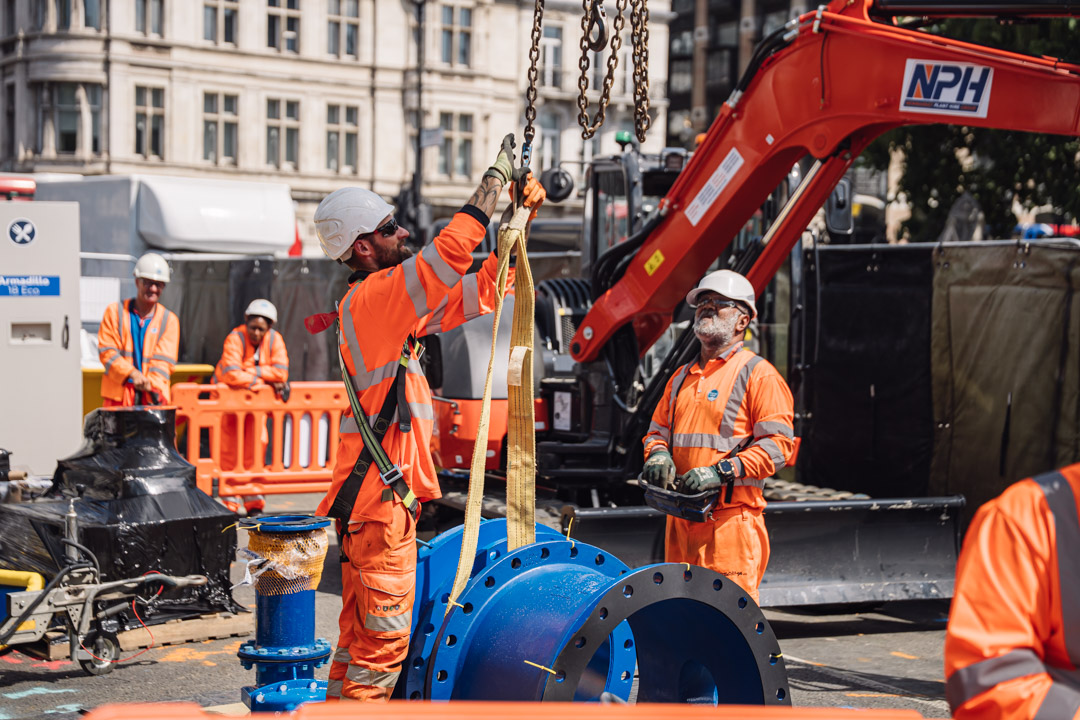
Completed. What was planned as four phases was replanned down to two, and — running two gangs on 24/7, 12-hour shifts — the programme was cut from six weeks to four, despite the mid-job HV cable clash and one of the most congested utility corridors in London.