
Hand-dug, timber-supported tunnels that reach assets under roads and buildings nobody's allowed to dig up.
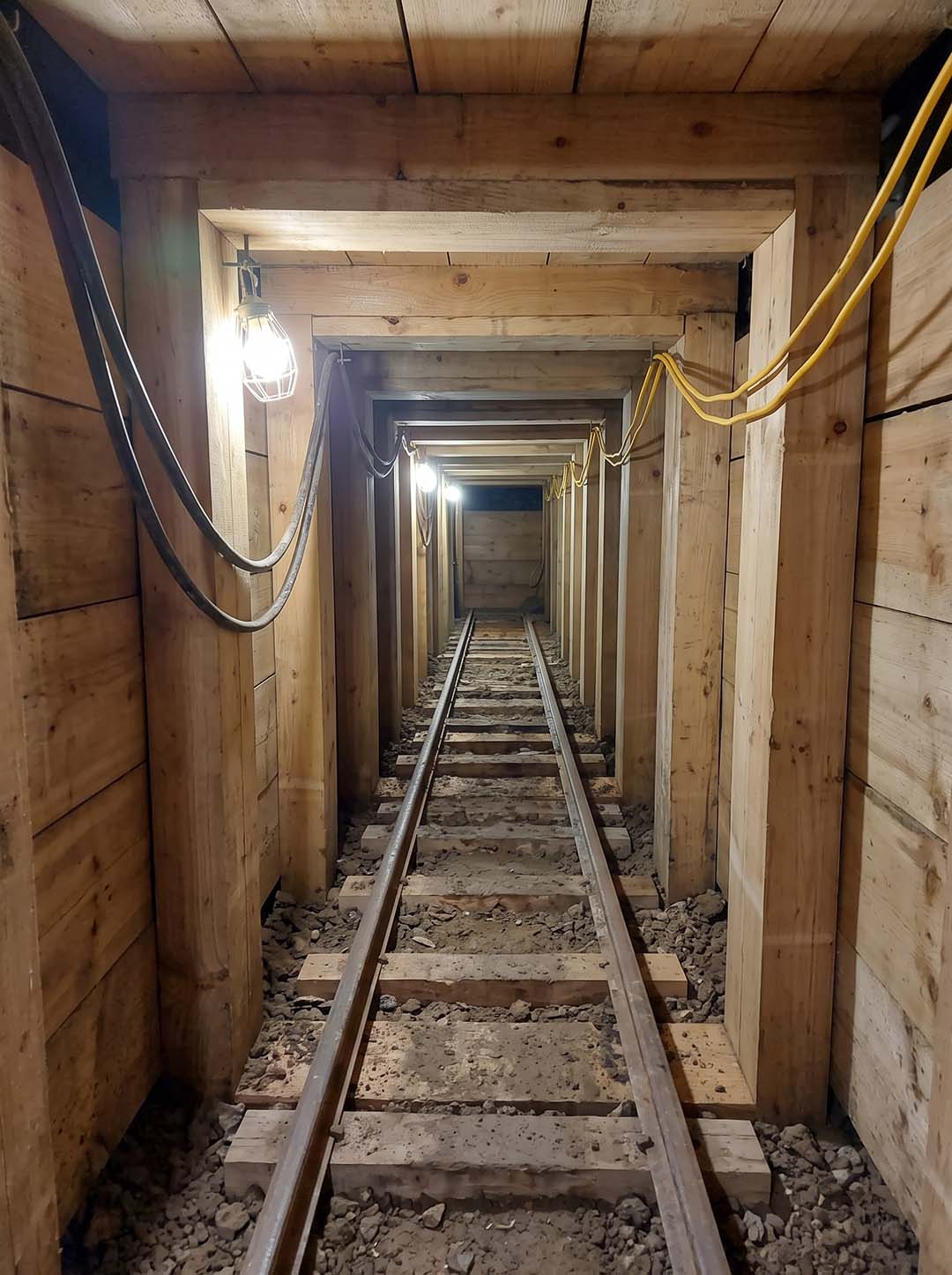
A timber heading is an underground tunnel, hand-dug and built up as it advances, so the surface above stays untouched. A shaft goes in at one end, typically 3 to 5 metres deep, and the heading is driven across to reach the asset, whether that's under a live road, through someone's back garden, or beneath a site where digging up the surface simply isn't allowed. We've headed under the road at the Houses of Parliament for exactly that reason: security meant the gates couldn't be opened, so we went underneath instead.
Whenever the surface above can't be opened. That's live roads, back gardens, or sensitive sites where the asset simply has to be reached from below.
Loose or running ground like sand or loose ballast. It won't hold its own face, so it has to be dug and pushed forward in small stages, keeping everything tight as you go. Harder ground is physically tougher to break through but actually easier to progress through safely, since it holds its shape.
Send the details and get a proper quote back, not a boilerplate one.