Find the leak, bypass the flow, repair the main. The district stays on supply throughout.
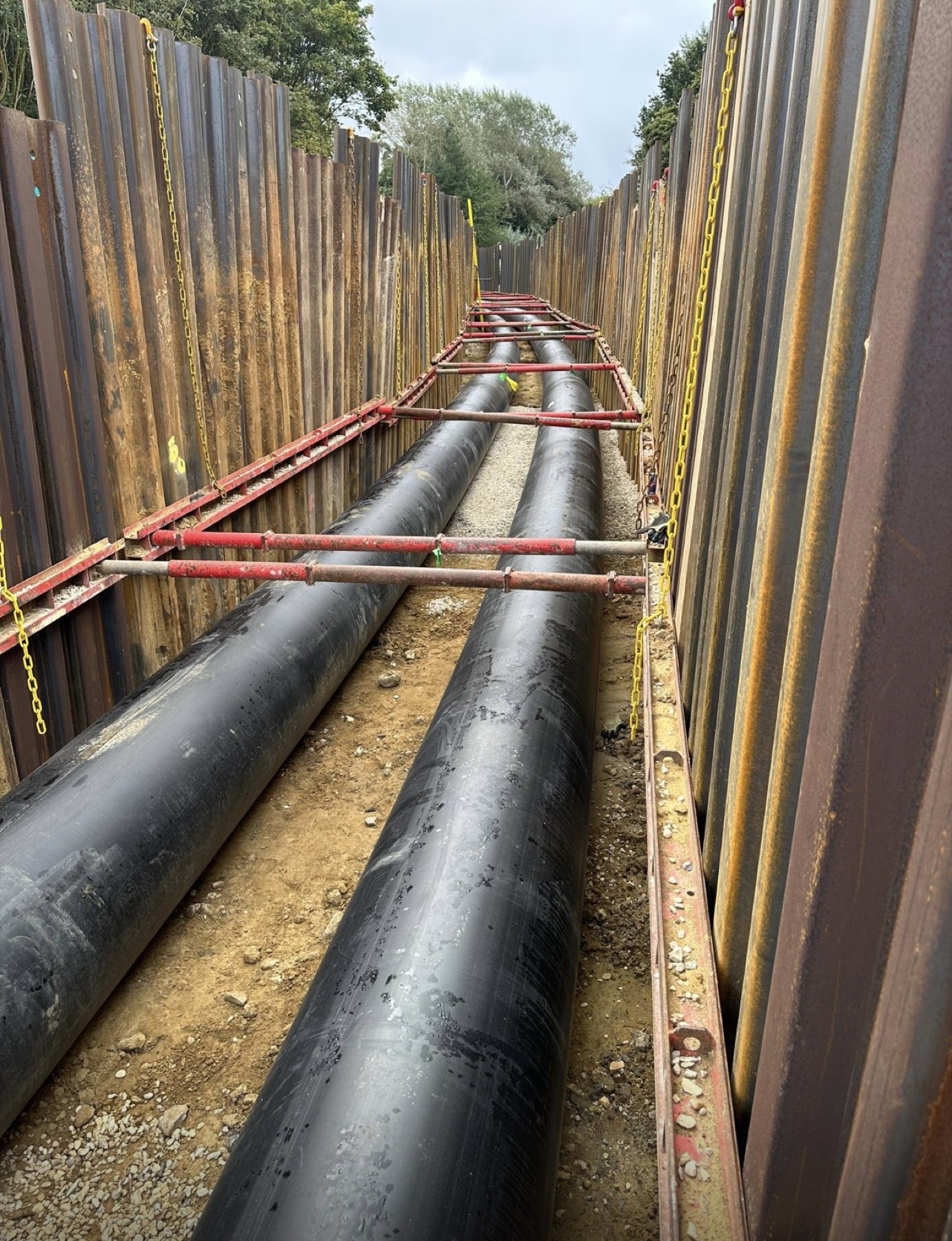
Find the leak, bypass the flow, repair the main. Once we're on site, the area is CAT & Genny scanned to mark up every buried service before anything is dug. In congested ground we use vacuum excavation to expose the pipe without damaging what's around it, then dig down to inspect the damage. If it's a joint, we can often seal it with an encapsulation collar; if the pipe itself has fractured, that section is cut out and replaced. Meanwhile a temporary bypass is connected further along the main and the leaking section is shut in, so the district stays on supply throughout.
We connect a temporary bypass further back on the main and shut in the section that's leaking. Flow keeps moving through the bypass while the repair happens, so no one gets cut off.
Most bursts run 7 to 14 days start to finish. Speed matters here: a burst trunk main can flood basements, car parks and even train stations, so stabilising it fast is the priority before anything else.
Send the details and get a proper quote back, not a boilerplate one.