
Collapsed sewers and manholes rebuilt, by excavation or tunnelled access where the surface must stay shut.
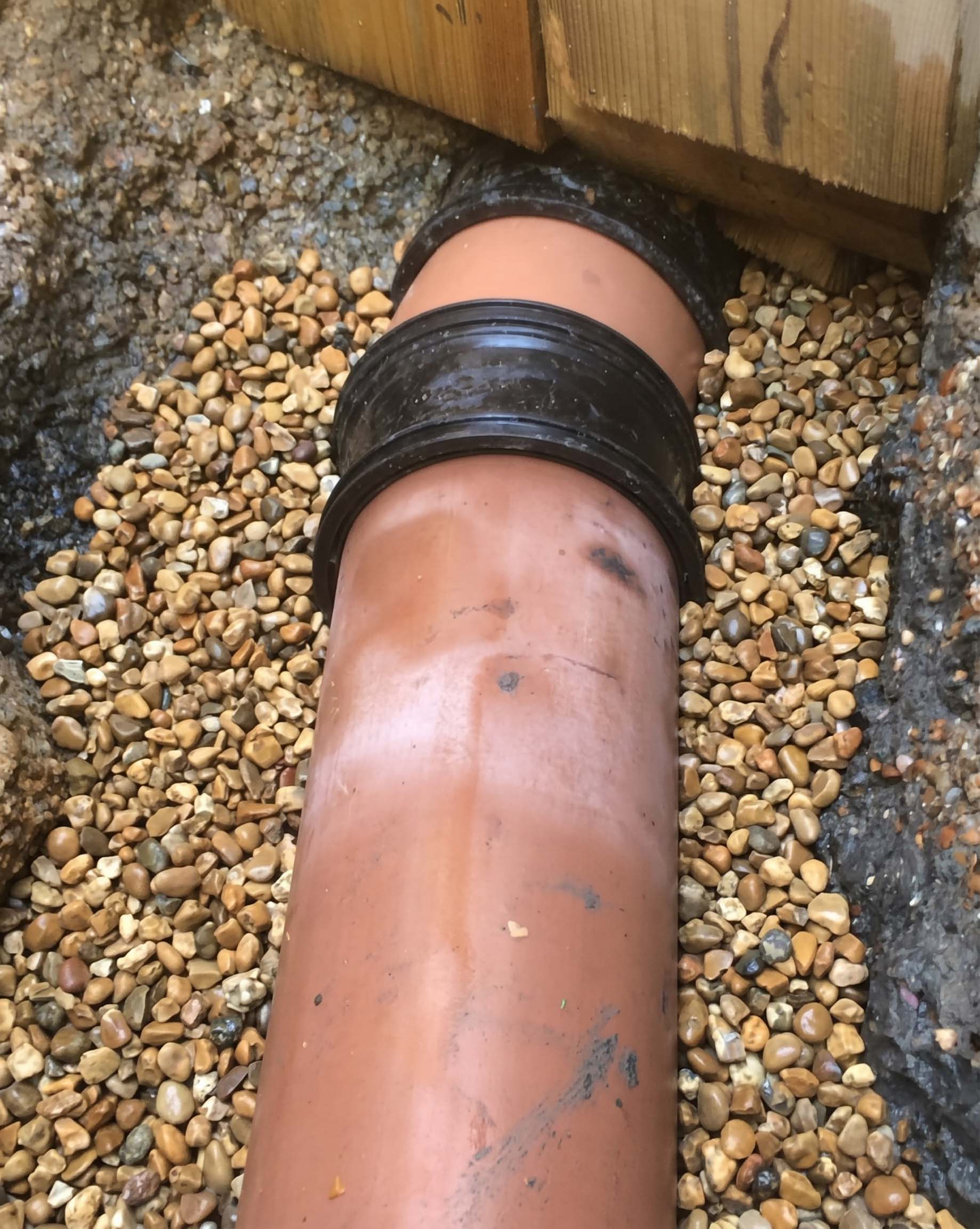
Most collapses come down to tree roots working their way through a joint or the pipe wall, or ground movement squeezing a clay pipe that simply can't flex the way the ground around it does. Where the route runs under a congested footpath or crosses other services, we head in underneath rather than dig through them.
Sewers usually sit as the deepest service in the ground, often 3 to 4 metres down. Manhole rebuilds range from swapping a single damaged ring to digging a shaft around a fully collapsed structure and rebuilding it from the base up.
It comes down to what's above the sewer. A congested footpath or other services in the way means heading in underneath rather than digging through them. Sewers usually sit as the deepest service in the ground, so tunnelling is often the only practical route.
The ground above it can wash into the void with no visible sign, until it finally gives way — sometimes suddenly, as a sinkhole or a full collapse. It's a genuine safety risk to traffic and pedestrians, and it only gets more disruptive to fix the longer it's left.
Send the details and get a proper quote back, not a boilerplate one.